

As a trusted supplier of Inconel pipes, I often encounter inquiries regarding the specific heat capacity of these high - performance alloys. In this blog, we'll delve deep into the concept of specific heat capacity, explore what it means for Inconel pipes, and understand its significance in various applications.
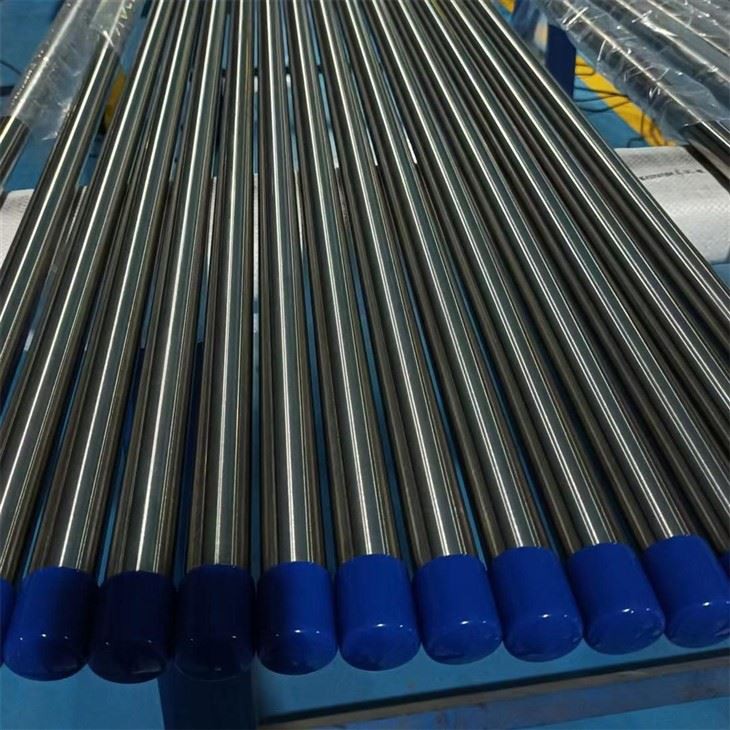
Understanding Specific Heat Capacity
Specific heat capacity, denoted as (c), is a fundamental physical property of a substance. It is defined as the amount of heat energy required to raise the temperature of a unit mass of the substance by one degree Celsius (or one Kelvin). Mathematically, it is expressed by the formula (Q = mc\Delta T), where (Q) is the heat energy transferred, (m) is the mass of the substance, (c) is the specific heat capacity, and (\Delta T) is the change in temperature.
The units of specific heat capacity are typically joules per kilogram - Kelvin ((J/(kg\cdot K))) in the SI system. Different materials have different specific heat capacities. For example, water has a relatively high specific heat capacity of about (4186 J/(kg\cdot K)), which means it can absorb a large amount of heat energy without a significant increase in temperature. This property makes water an excellent coolant in many industrial and domestic applications.
Specific Heat Capacity of Inconel Alloys
Inconel is a family of austenitic nickel - chromium - based superalloys known for their excellent corrosion resistance, high - temperature strength, and oxidation resistance. There are several grades of Inconel, such as Inconel 600, Inconel 625, and Inconel 718, each with slightly different compositions and properties.
The specific heat capacity of Inconel alloys can vary depending on the exact composition, temperature, and heat treatment. Generally, the specific heat capacity of Inconel alloys at room temperature (around 25°C or 298 K) is in the range of approximately (430 - 460 J/(kg\cdot K)).
Let's take Inconel 600 Pipe as an example. Inconel 600 is a nickel - chromium - iron alloy with good resistance to oxidation and corrosion in a wide range of environments. The specific heat capacity of Inconel 600 at room temperature is around (440 J/(kg\cdot K)). As the temperature increases, the specific heat capacity of Inconel 600 also changes. At higher temperatures, the atomic vibrations within the alloy increase, and more energy is required to raise the temperature further.
Factors Affecting the Specific Heat Capacity of Inconel Pipes
Composition
The chemical composition of Inconel alloys plays a crucial role in determining their specific heat capacity. Different elements have different atomic masses and bonding characteristics, which affect how the alloy stores and transfers heat. For example, adding more nickel to an Inconel alloy can change its specific heat capacity due to the unique thermal properties of nickel.
Temperature
As mentioned earlier, temperature has a significant impact on the specific heat capacity of Inconel pipes. At low temperatures, the atoms in the alloy are in a relatively ordered state, and the specific heat capacity is relatively low. As the temperature rises, the atoms gain more energy and vibrate more vigorously, leading to an increase in the specific heat capacity.
Heat Treatment
Heat treatment processes such as annealing, quenching, and tempering can alter the microstructure of Inconel pipes. A different microstructure can affect the way heat is transferred through the material, thus influencing the specific heat capacity. For instance, a well - annealed Inconel pipe may have a different specific heat capacity compared to a quenched one.
Significance of Specific Heat Capacity in Inconel Pipe Applications
Heat Exchangers
In heat exchanger applications, Inconel pipes are often used due to their excellent corrosion resistance. The specific heat capacity of Inconel pipes determines how much heat they can absorb or release during the heat transfer process. A higher specific heat capacity means that the pipes can store more heat energy, which is beneficial for efficient heat exchange.
High - Temperature Processing
In industries such as aerospace, power generation, and chemical processing, Inconel pipes are used in high - temperature environments. The specific heat capacity of Inconel pipes affects how they respond to rapid temperature changes. Pipes with a suitable specific heat capacity can withstand thermal shocks and maintain their structural integrity during high - temperature operations.
Welding and Fabrication
During the welding and fabrication of Inconel pipes, the specific heat capacity is an important consideration. The heat input during welding needs to be carefully controlled to avoid overheating and distortion. Understanding the specific heat capacity of Inconel pipes helps in determining the appropriate welding parameters and ensuring a high - quality weld.
Measuring the Specific Heat Capacity of Inconel Pipes
There are several methods to measure the specific heat capacity of Inconel pipes. One common method is the differential scanning calorimetry (DSC). In DSC, a small sample of the Inconel pipe is heated at a controlled rate, and the heat flow into or out of the sample is measured. By comparing the heat flow of the sample with a reference material, the specific heat capacity of the Inconel pipe can be determined.
Another method is the adiabatic calorimetry. In this method, the sample is placed in an adiabatic container, and a known amount of heat is added to the sample. The change in temperature of the sample is measured, and the specific heat capacity is calculated using the formula (Q = mc\Delta T).
Conclusion
The specific heat capacity of Inconel pipes is an important physical property that affects their performance in various applications. As a supplier of Inconel pipes, we understand the significance of this property and ensure that our products meet the highest quality standards. Whether you are using Inconel pipes for heat exchangers, high - temperature processing, or other applications, having a good understanding of the specific heat capacity can help you make informed decisions.
If you are interested in purchasing Inconel pipes or have any questions about their specific heat capacity or other properties, please feel free to contact us for a detailed discussion. We are committed to providing you with the best products and services to meet your specific needs.
References
- "Introduction to Materials Science for Engineers" by James F. Shackelford
- "Nickel and High - Nickel Alloys" by ASM International