

ALLOK (Jiaxing) Metal Materials : Your Trustworthy 304 Stainless Steel Pipe Manufacturer!
Our company's monthly output is 300,000 meters of stainless steel electropolished pipes, 600,000 meters of stainless steel and nickel alloy bright annealed pipes, and 80 tons of stainless steel AP pipes. Products are widely used in semiconductor, biopharmaceutical, photovoltaic, chemical instrument, automotive industry, special gas engineering and other industries.
Rich Products
Our company can produce stainless steel tubes, nickel alloy tubes, electrolytic polished tubes, bright annealed tubes, stainless steel coils, stainless steel capillary tubes, alloy tubes, etc.
Products Widely Used
The products produced by our company can be widely used in the biopharmaceutical industry, fine chemical industry, semiconductor industry, instrumentation industry, gas engineering industry and aerospace industry.
Advanced Production Equipment
Our company has advanced production equipment, such as precision cold rolling mills, cold drawing machines, bright annealing furnaces, ultrasonic cleaning tanks, passivation tanks, multi-line electrolytic polishing devices, etc.
Quality Guaranteed
All products we produce have ISO9001:2015 certificates, and all products are strictly tested in accordance with industry standards and contract agreements before leaving the factory. MTC is provided, and third-party testing certificates can be provided when necessary.


What is 304 Stainless Steel Pipe
304 Stainless Steel Pipe is the most flexible and commonly used stainless steel on the market and one of the most common alloys of its kind. It is basically an austenitic chromium alloy that is also known as "18/8" stainless steel, as the steel composition is 18% chromium and 8% nickel. 304 stainless steel, even though it is vulnerable to corrosion by chloride alternatives, pitting or cracking may be caused by chloride ions, which are essentially localised corrosion regions. These deteriorated parts can cause interior components to deteriorate if they are exposed to chromium oxide barriers.
Features of 304 Stainless Steel Pipe
Durability
Stainless steel 304 is highly durable and can withstand wear and tear and extreme temperatures without compromising its structure or integrity. This makes it ideal for applications where materials must withstand harsh conditions without damage or weakness.
Strength
Stainless steel 304 offers superior strength compared to other metals, which makes it great for applications that require heavy-duty materials that won’t bend or break easily.
Corrosion Resistance
One of the most significant advantages of stainless steel 304 is its ability to resist corrosion. The metal is highly resistant to rusting, which makes it ideal for outdoor applications where weather conditions can be unpredictable.
Versatility
Stainless steel 304 can be used in various applications thanks to its versatility. The metal can be machined into complex shapes or welded together easily, allowing you to create a wide range of products, from kitchen appliances to automotive parts.
Types of 304 Stainless Steel Pipe
Seamless Pipes
Seamless 304 stainless steel pipes are manufactured by extruding a solid billet through a die to form a hollow tube without any welding or joints. They offer uniformity in wall thickness and are preferred for applications requiring high pressure, corrosion resistance, and smooth interior surfaces.
Welded Pipes
Welded 304 stainless steel pipes are fabricated by rolling a flat strip of stainless steel into a cylindrical shape and welding the seam using various welding techniques such as TIG (Tungsten Inert Gas) or MIG (Metal Inert Gas). Welded pipes are available in different types, including longitudinal or spiral welded, and are suitable for a wide range of applications, including structural, plumbing, and industrial piping systems.
ERW Pipes
Electric Resistance Welded (ERW) 304 stainless steel pipes are produced by passing a high-frequency electrical current through the steel strip to generate heat, forming the seam without the use of filler material. ERW pipes are known for their high strength, dimensional accuracy, and cost-effectiveness, making them suitable for applications in construction, automotive, and mechanical industries.
LSAW Pipes
Longitudinal Submerged Arc Welded (LSAW) 304 stainless steel pipes are manufactured by forming a steel plate into a cylindrical shape and welding the longitudinal seam using a submerged arc welding process. LSAW pipes are commonly used for conveying fluids and gases in oil and gas, petrochemical, and water distribution industries due to their high strength, large diameter capabilities, and efficient production process.
SSAW Pipes
Spiral Submerged Arc Welded (SSAW) 304 stainless steel pipes are produced by helically welding a steel strip around a cylindrical mandrel to form a spiral seam. SSAW pipes offer advantages such as uniform wall thickness, improved resistance to internal and external pressures, and suitability for high-stress applications in offshore, marine, and structural construction projects.
Duplex Pipes
Duplex 304 stainless steel pipes are composed of a mixed microstructure of austenite and ferrite phases, offering enhanced strength, corrosion resistance, and resistance to stress corrosion cracking compared to standard austenitic stainless steels. Duplex pipes are commonly used in applications requiring high mechanical strength and resistance to chloride-induced corrosion, such as chemical processing, desalination, and marine environments.
Hygienic Pipes
Hygienic-grade 304 stainless steel pipes are designed for use in industries such as food and beverage, pharmaceuticals, and biotechnology, where cleanliness and sanitary conditions are critical. These pipes are manufactured to meet stringent hygiene standards and regulatory requirements, featuring smooth, polished surfaces, crevice-free construction, and compliance with food safety regulations to prevent bacterial growth and contamination.
High Pressure Pipes
High-pressure 304 stainless steel pipes are engineered to withstand elevated pressures and temperatures in demanding applications such as hydraulic systems, oil and gas processing, and power generation. These pipes are designed with thicker walls, reinforced joints, and specialized coatings to ensure leak-free operation and long-term reliability under extreme operating conditions.
Heat Exchanger Tubes
304 stainless steel heat exchanger tubes are specifically designed for transferring heat between two fluids in various industrial processes, including HVAC (Heating, Ventilation, and Air Conditioning), refrigeration, chemical processing, and power generation. These tubes feature high thermal conductivity, corrosion resistance, and compatibility with a wide range of fluids, making them suitable for use in both shell-and-tube and plate heat exchanger configurations.
Instrumentation Tubes
Instrumentation-grade 304 stainless steel tubes are precision-engineered for use in instrumentation and control systems, analytical instruments, and process monitoring applications requiring high accuracy, reliability, and resistance to vibration and pressure fluctuations. These tubes are manufactured to tight dimensional tolerances, with smooth, burr-free interiors and polished exteriors to facilitate leak-free connections and ensure accurate measurement and control of fluids and gases.
Disadvantages Of 304 Stainless Steel Pipe
Cost
As a premium material, stainless steel 304 is more expensive than other metals such as aluminum or carbon steel. Using this material may not always be feasible, depending on your budget constraints.
Heat Sensitivity
While stainless steel is highly durable and robust, it isn’t necessarily the best choice when working with extreme temperatures as it can become brittle when exposed to very high heat levels over long periods. Additionally, welding stainless steel at too high a temperature can cause warping and distortion in the final product, so care must be taken when working with this type of metal at high temperatures.
Weight
Due to its density, stainless steel 304 tends to be heavier than other metals such as aluminum which may make it unsuitable for specific projects where lightweight materials are needed, such as aircraft components or bicycle frames.
Process Of 304 Stainless Steel Pipe
Raw Material Preparation
The raw materials, primarily stainless steel ingots, are melted in an electric arc furnace. These ingots contain the necessary alloying elements such as chromium, nickel, and other minor additives.
Refining
The molten steel is refined to remove impurities through processes like argon oxygen decarburization (AOD) or vacuum oxygen decarburization (VOD). This step ensures that the carbon content remains low and the desired alloy composition is achieved.
Casting
The refined steel is then cast into billets, blooms, or slabs, depending on the final product shape required. Continuous casting methods are often used to produce billets that have uniform dimensions and fewer defects.


Hot Rolling
The billets are heated to high temperatures and hot rolled into coils or sheets. During this process, the metal is passed through a series of rollers that reduce its thickness and elongate it into the desired shape.
Cold Working
After hot rolling, the steel is cold worked to achieve the precise dimensions and improved mechanical properties required for piping. This can involve operations such as drawing, extrusion, or cold rolling.
Heat Treatment
To enhance the strength and ductility, the steel may undergo heat treatment. For 304 stainless steel, annealing is a common practice, which involves heating the steel to a specific temperature and then cooling it slowly in a controlled manner.
Straightening and Cutting
Once the pipe has been formed and heat-treated, it is straightened and cut to the desired length. Precision cutting techniques are used to ensure accurate lengths and smooth edges.
Surface Finishing
The surface of the pipe is then finished to meet the required standards. Finishes can range from polished to matte, depending on the application. Mechanical polishing, buffing, or chemical etching may be employed.
Inspection and Testing
Throughout the manufacturing process, but especially after the pipe is fully formed, it is inspected and tested for defects and compliance with specifications. Tests may include visual inspection, ultrasonic testing, X-ray inspection, and pressure tests to ensure integrity and safety.
Quality Control
Quality control procedures are followed at each stage to ensure that the final product meets the strict standards set for 304 stainless steel pipe. This includes checking the chemical composition and mechanical properties.
Packaging and Dispatch
Once the pipes have passed all inspections and tests, they are packaged for transportation and delivery to customers.
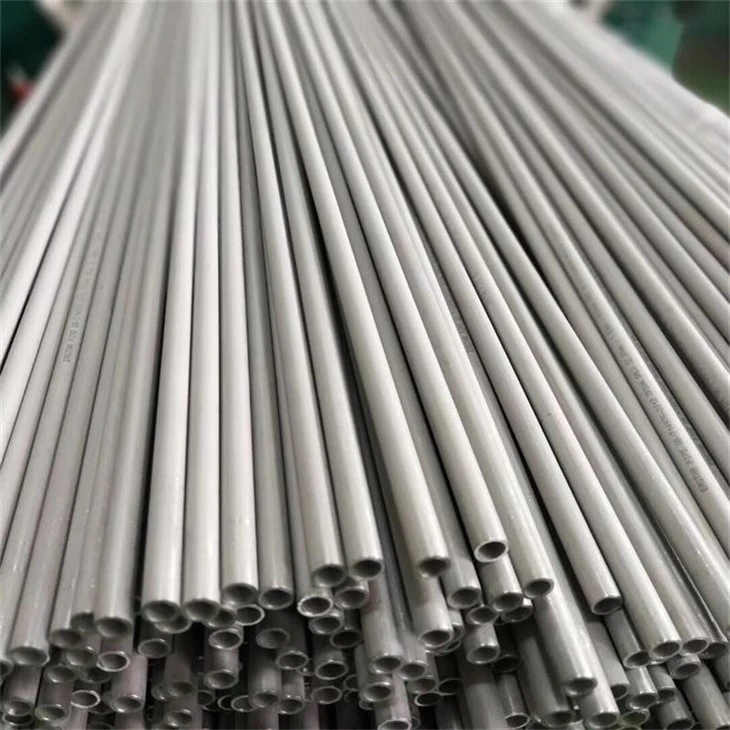
How to Choose 304 Stainless Steel Pipe
The first factor you must consider when choosing the best 304 stainless steel seamless pipe is the material quality. Quality is, indeed, critical when it comes to choosing the right stainless steel pipes for your project. High-grade stainless steel materials typically offer a higher level of durability, corrosion resistance, and strength. So, always choose materials that are made of high-grade material, so you get quality products that can withstand pressure and last for a long time.
Another crucial factor to consider is the pipe’s size. When selecting the right stainless steel pipe size, you will need to determine the application’s design and how it will be installed. So, it’s essential to measure the correct pipe size to ensure the pipe can efficiently carry fluids. Plus, always ensure the pipe size is compatible with other pipe fittings, components, and assemblies you plan to use in your project.
What is the project’s application, and how can stainless steel seamlessly blend with it? These are some of the questions you must consider. Always consider the application of the stainless steel pipe before purchasing to avoid making errors. Different applications require different types of pipes, and 304 stainless steel seamless pipe is best suited for commercial, industrial, and heavy-high-temperature applications.
The pressure handling capacity refers to the maximum pressure that the stainless steel seamless pipe can withstand without causing severe damage or even breaking altogether. Note that high-pressure environments require a thicker-walled and more robust pipe to handle the pressure optimally. If you’re going to be working in high-pressure environments, always choose a stainless steel pipe that can withstand pressure and is designed accordingly.
Finally, always compare the different products and material costs from multiple vendors before making a purchase. The cost of 304 stainless steel seamless pipes varies from vendor to vendor; thus, it’s not always guaranteed that the cheapest options will offer the best value. Be sure to research your vendors first before purchasing to guarantee quality service, delivery, and after-sales support.
How to Maintain 304 Stainless Steel Pipe
Regular Cleaning
Clean the surface of the pipe regularly with a mild detergent or soap and warm water. Avoid using abrasive cleaners or pads that could scratch the surface.
Avoiding Contamination
Keep the pipes free from contaminants that could cause corrosion, such as chloride ions, acids, and harsh chemicals.
Inspecting For Damage
Regularly inspect the pipes for signs of damage, such as corrosion, cracks, or leaks. Address any issues promptly to prevent further damage.
Avoiding Abrasion
Minimize the risk of abrasion by ensuring that the pipes are properly supported and protected from physical damage.
Maintaining Proper Conditions
Keep the pipes in a suitable environment with proper ventilation and drainage to prevent the accumulation of moisture or corrosive substances.
Avoiding Harsh Conditions
Avoid exposing the pipes to extreme temperatures, high levels of humidity, or harsh chemicals that could accelerate corrosion.
How to Store 304 Stainless Steel Pipe
Clean and Dry
Before storage, ensure the pipes are clean and dry to prevent corrosion or contamination during storage.
Protective Coating
Consider applying a protective coating or wrapping to the pipes to shield them from moisture and environmental elements.
Avoid Direct Contact
Store the pipes away from direct contact with the ground or concrete floors to prevent moisture absorption and potential corrosion.
Proper Support
Store the pipes in a way that provides adequate support to prevent bending or deformation.
Controlled Environment
Choose a storage area with controlled temperature and humidity levels to minimize the risk of corrosion.
Organized Storage
Arrange the pipes systematically, keeping similar sizes or types together for easy identification and access.
Applications of 304 Stainless Steel Pipe
Water Supply and Distribution
Stainless steel pipes are used for transporting both potable water and wastewater. They are favored for their durability and ability to prevent leaks and contamination.
Chemical Processing
In chemical plants, 304 stainless steel pipes are employed for conveying a wide range of corrosive substances, including acids and alkalis.
Food and Beverage Industry
The food industry relies on 304 stainless steel pipes for their non-reactive nature, ensuring that the quality of processed foods is maintained and there is no risk of contamination.
Pharmaceutical Manufacturing
In pharmaceutical applications, 304 stainless steel pipes are used for their ability to withstand cleaning and sterilization processes while maintaining product purity.
Automotive Industry
Automotive manufacturers use 304 stainless steel pipes in exhaust systems and fuel lines due to their resistance to rust and corrosion.
Construction and Architecture
Stainless steel pipes are used in building facades, handrails, and structural components for their aesthetic appeal and longevity.
Oil and Gas
In the oil and gas sector, 304 stainless steel pipes are utilized for certain applications where moderate corrosion resistance is required.
Brewing Industry
Breweries use 304 stainless steel pipes for their brewing equipment, fermentation tanks, and distribution systems.
Pulp and Paper
In the pulp and paper industry, these pipes are used for carrying process chemicals and water.
Dairy Industry
The dairy industry prefers 304 stainless steel pipes for their hygienic properties and resistance to bacterial growth.
Marine Applications
Due to its corrosion resistance, particularly against saltwater, 304 stainless steel pipes are used in shipbuilding and marine environments.
HVAC Systems
Heating, ventilation, and air conditioning systems use 304 stainless steel pipes for their durability and resistance to corrosion, especially in harsh environments.
Certificate


Frequently Asked Questions
Q: What is 304 stainless steel pipe?
Q: How is 304 stainless steel pipe manufactured?
Q: What are the properties of 304 stainless steel pipe?
Q: What are the common applications of 304 stainless steel pipe?
Q: How does 304 stainless steel pipe compare to other grades?
Q: What are the environmental benefits of using 304 stainless steel pipe?
Q: How does 304 stainless steel pipe resist corrosion?
Q: What factors should be considered when selecting 304 stainless steel pipe for a specific application?
Q: How does 304 stainless steel pipe perform in high-temperature environments?
Q: Can 304 stainless steel pipe be used for welding?
Q: What are the limitations of 304 stainless steel pipe?
Q: How is 304 stainless steel pipe typically finished?
Q: What is the difference between 304 stainless steel pipe and 316 stainless steel pipe?
Q: How can the mechanical properties of 304 stainless steel pipe be optimized for specific applications?
Q: What are the factors influencing the cost of 304 stainless steel pipe?
Q: How does 304 stainless steel pipe perform in cryogenic applications?
Q: What maintenance is required for 304 stainless steel pipe?
Q: Can 304 stainless steel pipe be used for structural applications?
Q: What are the safety considerations when working with 304 stainless steel pipe?
Q: How does 304 stainless steel pipe contribute to sustainable development goals?
We're well-known as one of the leading 304 stainless steel pipe manufacturers and suppliers in China. Please feel free to wholesale custom made 304 stainless steel pipe at competitive price from our factory.
Incoloy 800H Pipe