

ALLOK (Jiaxing) Metal Materials : Your Trustworthy 316 Stainless Steel Pipe Manufacturer!
Our company's monthly output is 300,000 meters of stainless steel electropolished pipes, 600,000 meters of stainless steel and nickel alloy bright annealed pipes, and 80 tons of stainless steel AP pipes. Products are widely used in semiconductor, biopharmaceutical, photovoltaic, chemical instrument, automotive industry, special gas engineering and other industries.
Rich Products
Our company can produce stainless steel tubes, nickel alloy tubes, electrolytic polished tubes, bright annealed tubes, stainless steel coils, stainless steel capillary tubes, alloy tubes, etc.
Products Widely Used
The products produced by our company can be widely used in the biopharmaceutical industry, fine chemical industry, semiconductor industry, instrumentation industry, gas engineering industry and aerospace industry.
Advanced Production Equipment
Our company has advanced production equipment, such as precision cold rolling mills, cold drawing machines, bright annealing furnaces, ultrasonic cleaning tanks, passivation tanks, multi-line electrolytic polishing devices, etc.
Quality Guaranteed
All products we produce have ISO9001:2015 certificates, and all products are strictly tested in accordance with industry standards and contract agreements before leaving the factory. MTC is provided, and third-party testing certificates can be provided when necessary.


What is 316 Stainless Steel Pipe
316 stainless steel pipe is a type of stainless steel pipe that is made from an alloy containing approximately 16-18% chromium, 10-14% nickel, and 2-3% molybdenum. The addition of molybdenum provides improved corrosion resistance, especially in environments with chlorides or other corrosive substances. 316 stainless steel is commonly used in various industries, including chemical processing, food and beverage, pharmaceuticals, marine applications, and architectural applications. It offers excellent resistance to corrosion and oxidation, making it suitable for use in harsh environments.
Features of 316 Stainless Steel Pipe
Corrosion Resistance
Foremost among the advantages of Stainless Steel 316 Pipes is their extraordinary corrosion resistance. They exhibit high resistance to pitting, crevice corrosion, and stress corrosion cracking. Adding molybdenum to the alloy elevates the corrosion resistance of 316 stainless steel pipes, making them apt for deployment in marine environments and other settings where exposure to salt is a concern.
Strength and Durability
These pipes epitomize strength and durability, making them an excellent choice for high-pressure applications. They demonstrate remarkable resistance to wear and tear and can withstand heavy usage over extended periods. This robustness is a cost-effective alternative for a wide range of industrial applications.
Heat Resistance
Stainless Steel 316 Pipes exhibit impressive heat resistance, capable of withstanding high temperatures without undergoing deformation or weakening. This property renders them suitable for applications involving elevated temperatures, such as chemical processing or oil and gas production.
Low Maintenance
Another significant advantage of using Stainless Steel 316 Pipes in industrial applications is their low maintenance requirement. They are easy to clean and sanitize, eliminating the need for painting or additional coatings to preserve their appearance or functionality.
Versatility
These pipes boast remarkable versatility, lending themselves to various industrial applications. They can be fabricated into different shapes and sizes, catering to needs in pipelines, pressure vessels, heat exchangers, and various other applications.
Environmental Friendliness
Stainless steel, as a material, aligns with environmental sustainability. It is 100% recyclable and does not release harmful substances into the air or water. Opting for these pipes in industrial applications allows companies to reduce their environmental footprint and align with sustainability objectives.
Types of 316 Stainless Steel Pipe
Seamless stainless steel 316 pipes are manufactured with no welding or joints. They are perfect for critical applications such as chemical processing, where leakages could cause significant damage. The absence of welds or joints means these pipes can handle high pressure without failure. They are also ideal for conveying liquids and gases at high temperatures and for use in environments prone to corrosion.
Welded pipes are ideal for low-pressure applications and are less expensive than seamless pipes. They are suitable for use in industries with corrosive environments and can handle the transport of chemicals in bulk quantities. Welded pipes come in different thicknesses, lengths, and diameters to cater to the specific needs of different applications. They are found in the pharmaceutical industry, food and beverage, and construction sectors.
Electropolished stainless steel 316 pipes are unique and known for their smooth exterior finish that prevents the accumulation of bacteria and other hazardous materials. These pipes undergo a process of electroplating that removes any debris or surface irregularities, leaving the surface uniform. As a result, they are suitable for industries where cleanliness is crucial, such as the food and beverage, pharmaceutical, and medical sectors.
Square pipes are stainless steel 316 pipes that have a unique square shape. They are perfect for applications such as building balconies, furniture, and handrails. They are strong, durable, and require little to no maintenance. Square pipes come in various sizes and thicknesses, making them versatile and ideal for applications requiring a unique shape.
Round stainless steel 316 pipes are commonly used in the construction industry for their robustness and affordability. They are used in various applications, including building supports, handrails, conveyor belts, frames, and fencing. They are also used in oil and gas to convey liquids and gases.
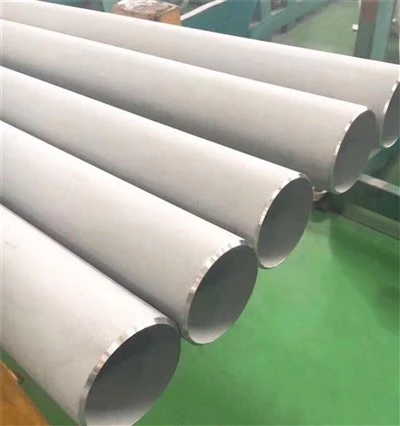
Process of 316 Stainless Steel Pipe
Raw Material Selection
The first step is to choose high-quality raw materials that meet the specifications of 316 stainless steel, such as stainless steel sheets or coils. These materials should have appropriate compositions of chromium, nickel, molybdenum and other alloying elements.
Forming
The selected stainless steel material is then formed into the desired shape of pipe. This can be accomplished by a variety of methods, including hot or cold rolling, extrusion, or welding.
Welding
If the pipe is produced by welding, formed stainless steel materials are welded together to form a continuous pipe. This can be done using various welding techniques, such as TIG (tungsten inert gas) welding or laser welding.
Heat Treatment
After forming and welding, the pipe can be heat treated to enhance its mechanical properties. This process usually involves heating the pipe to a specific temperature and then slowly cooling it. Heat treatment can improve the strength, hardness and corrosion resistance of pipes.
Finishing
Pipes may undergo various finishing processes to achieve the desired surface finish. This may include processes such as pickling, passivation, polishing or brushing. These processes help remove any impurities, scale, or oxides from the surface and improve the overall appearance of the pipe.
Inspection and Testing
Once the pipe is manufactured and completed, it undergoes rigorous inspection and testing to ensure it meets the required specifications and quality standards. This can include visual inspection, dimensional inspection, non-destructive testing (such as ultrasonic or X-ray inspection) and mechanical testing.
Packaging and Shipping
Finally, the 316 stainless steel pipe is properly packaged to protect it during transportation and storage. They are often bundled, wrapped, or placed in crates or containers for shipment to customers or distributors.
Advantage of Using 316 Stainless Steel Pipe
Non-Magnetic
Another advantage of stainless steel 316 pipes is that they are non-magnetic. This means they will not be attracted to magnets, making them ideal for use in applications where magnetic materials are not desired.
High Temperature Resistance
Another advantage of stainless steel 316 pipes is their high temperature resistance. This means that they can withstand high temperatures without being damaged. This makes them ideal for use in high-temperature applications such as boiler systems.
Recyclable
Another advantage of stainless steel 316 pipes is that they are recyclable. This means that they can be reused or recycled after their initial use, which helps to reduce waste and conserve resources.
How to Choose 316 Stainless Steel Pipe
Application and Environment
Determine the expected use of the pipeline. Is it used for general applications, or does it need to deal with corrosive substances, high pressure or extreme temperature? The environment of the installation pipeline (ocean, chemical factory, food processing, etc.) will affect the choice of pipeline materials and grades.
Corrosion Resistance
316 stainless steel is famous for its excellent corrosion resistance. This is due to the presence of molybdenum, which improves its ability to withstand chloride and other acidic compounds. If the application involves exposed to salt, acid or other corrosive agents, 316 steel is usually a good choice.
Mechanical Requirements
Evaluate the mechanical requirements of applications, such as stretching strength, yield strength and hardness. These characteristics will determine the applicability of pipelines to bearing loads, impacts or wear.
Temperature Resistance
If the pipeline bears high temperature, make sure that 316 steel can maintain its mechanical performance and corrosion resistance at these temperatures. For extremely high temperature applications, alternative levels such as 316L or 347 may be more suitable.
Pressure Level
Consider the work pressure of the system. The pipeline must reach or exceed the maximum work pressure. Pressure levels are usually specified by standard standards (such as ASME B36.19M for public pipelines) or pipelines of inch sizes asme B36.1110M.
Wall Thickness and Diameter
According to the pressure requirements, the flow rate and space restriction are selected to choose appropriate wall thickness and diameter. Wall thickness also affects the overall strength and weight of the pipeline.
Surface
The surface of the pipeline will affect corrosion resistance, cleanliness and aesthetic attraction. For applications that need to be smooth to prevent bacterial growth, the polishing effect can be used.
Material Standards and Certification
Make sure that pipelines meet relevant industry standards, such as ASTM, EN, DIN, or ISO. In addition, NSF/ANSI 3A, such as food contact or NACE, such as corrosive certification.
Manufacturer and Quality
Choose well -known manufacturers with the history of high -quality stainless steel products. Verify whether the pipeline has undergone appropriate quality control measures and tests.
Compatibility With Other Materials
Make sure 316 stainless steel pipes are compatible with other materials (such as pads, valves and accessories) in contact.
Examine
Regularly check whether the pipeline has signs of corrosion, such as rust spots or discoloration. Solve any problems immediately to prevent further damage.
Protect
Considering the use of protective coatings or corrosive paint to further improve the durability of stainless steel pipes, especially under strict environmental conditions.
Properly Handle
Be careful to handle stainless steel pipes to avoid scratch or dentan that will damage its corrosion resistance. Use appropriate lifting equipment to avoid dragging the pipes on the rough surface.
Temperature Control
Pay attention to extreme temperatures, because excessive heat or cold will affect the characteristics of stainless steel. Ensure appropriate insulation and ventilation to maintain a stable temperature environment.
How to Maintain 316 Stainless Steel Pipe
Regularly Clean
Regularly clean the surface of the pipeline to remove dirt, dust and other pollutants. Use mild soap or cleaner and warm water, soft cloth or sponge. Avoid using stainless steel decorative chemicals or abrasive cleaners.
Avoid Pollution
Prevent contact with chloride, such as chloride found in saline or harsh cleaner because they can cause spots and corrosion.
Passivation
Passionate is a chemical treatment process that can remove free iron on the surface of stainless steel, thereby enhancing its corrosion resistance. This process is usually completed during the manufacturing process, but if it is needed, it can also be carried out on the spot
Applications of 316 Stainless Steel Pipe
Chemical Processing
316 stainless steel pipes are used in chemical processing plants, which safely transport corrosive chemicals and acids due to corrosion resistance.
Food and Beverage Industry
Due to its hygiene characteristics and resistance to food acid corrosion, it is usually used for food processing and beverage production facilities.
The Marine Environment
Due to its resistance to chloride corrosion, 316 stainless steel pipes are widely used in marine environments, used for shipbuilding, offshore platforms and marine equipment.
Medical Equipment
The high corrosion and biocompatibility of 316 stainless steel make it suitable for medical equipment and surgical instruments.
Pharmaceutical Industry
316 stainless steel pipes are used for drug manufacturing to inherit the ability of corrosive chemicals and maintain product purity.
Construction
In the building, 316 stainless steel pipes are used in structural applications that need to be corrosive and intensive, such as in the building facade, armrests and structural supports.
Petroleum and Natural Gas Industry
They are used in the oil and gas industries, and they are used to transport liquid and natural gas in harsh environments, including maritime rigs and pipelines.
Car
Due to the resistance to high temperature and corrosive exhaust gas, 316 stainless steel pipelines in the automotive exhaust system can be found in the car exhaust system.
Certificate


Frequently Asked Questions
Q: What is 316 stainless steel?
Q: How does 316 stainless steel resist corrosion?
Q: What are the key mechanical properties of 316 stainless steel?
Q: How does passivation enhance the corrosion resistance of 316 stainless steel?
Q: What are the common methods for cleaning 316 stainless steel pipes?
Q: Why is proper handling important for maintaining 316 stainless steel pipes?
Q: What are the potential consequences of chloride contamination on 316 stainless steel?
Q: How can temperature extremes affect the properties of 316 stainless steel pipes?
Q: What are the advantages of using 316 stainless steel pipes in the chemical processing industry?
Q: How does 316 stainless steel contribute to food safety in the food and beverage industry?
Q: What makes 316 stainless steel pipes suitable for marine environments?
Q: How does 316 stainless steel comply with regulatory standards in the medical device industry?
Q: What role does 316 stainless steel play in the pharmaceutical industry?
Q: In what structural applications is 316 stainless steel commonly used in construction?
Q: How does 316 stainless steel contribute to safety in the oil and gas industry?
Q: What makes 316 stainless steel suitable for automotive exhaust systems?
Q: How does 316 stainless steel compare to other stainless steel grades in terms of corrosion resistance?
Q: What factors should be considered when selecting 316 stainless steel pipes for a specific application?
Q: What maintenance practices can extend the lifespan of 316 stainless steel pipes in industrial settings?
Q: How does the cost of 316 stainless steel pipes compare to alternative materials in various industries?
We're well-known as one of the leading 316 stainless steel pipe manufacturers and suppliers in China. Please feel free to wholesale custom made 316 stainless steel pipe at competitive price from our factory.
2 Inch 316 Stainless Steel Pipe, 316L Stainless Steel Pipe, Stainless Steel Pipe